



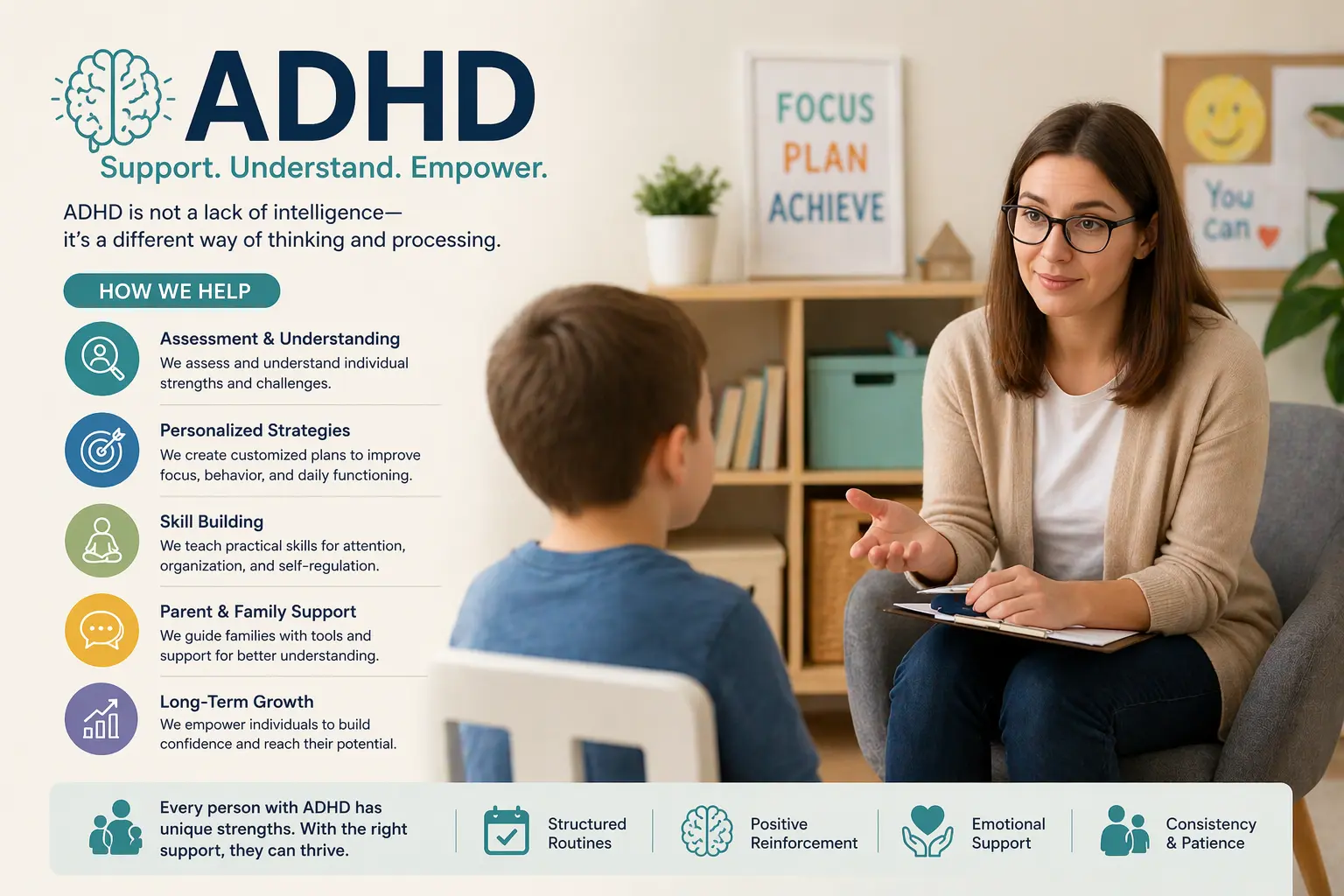
Understanding ADHD
Attention Deficit Hyperactivity Disorder (ADHD) is a neurodevelopmental condition that affects both children and adults. It impacts the brain’s ability to regulate attention, impulses, and activity levels. People with ADHD may struggle with focusing on tasks, staying organized, and managing time effectively. However, ADHD is not a limitation of intelligence; rather, it reflects a different way of thinking and processing information. With proper understanding and support, individuals with ADHD can lead successful and fulfilling lives.
Common Symptoms of ADHD
The symptoms of ADHD can vary widely but generally include inattention, hyperactivity, and impulsivity. Individuals may find it hard to concentrate, follow instructions, or complete tasks on time. They may also experience frequent distractions, forget daily responsibilities, or act without thinking. In some cases, hyperactivity may present as constant movement or restlessness. Recognizing these symptoms early can help in seeking appropriate guidance and support.
Causes and Contributing Factors
While the exact cause of ADHD is not fully understood, it is believed to be linked to a combination of genetic, neurological, and environmental factors. Brain structure and function differences, family history, and early developmental influences may contribute to the condition. Lifestyle factors such as lack of structure, poor sleep, and high stress levels can also worsen symptoms. Understanding these contributing factors is important for effective management.
Effective Ways to Manage ADHD
Managing ADHD requires a combination of structured routines, behavioral strategies, and emotional support. Creating a consistent daily schedule helps improve time management and focus. Breaking tasks into smaller, manageable steps can reduce overwhelm and increase productivity. Tools like reminders, planners, and timers can also support better organization. Therapy and coaching can provide practical techniques to manage behavior and improve self-control. Additionally, support from family, teachers, or colleagues plays a crucial role in building confidence and encouraging positive habits. With the right approach, individuals with ADHD can harness their strengths and achieve their full potential.


0 Comments